Allie's Decision to Stay
Allie's Decision to Stay marks the climax of the novel's central romantic conflict, the moment when Allie Nelson, on the verge of marrying Lon Hammond Jr., chooses instead to commit herself to Noah Calhoun, the man she loved one summer fourteen years earlier. The decision is not a sudden impulse but the culmination of a three-week internal struggle, a reunion that rekindles buried feelings, and a final, agonizing confrontation with her fiancé. It is the event that transforms a summer romance into a lifelong marriage, and it is the hinge on which the entire narrative of The Notebook turns, both for the young lovers and for the elderly Noah who reads their story aloud to Allie in the hope of a miracle.
The Weight of Class and Family
Allie's choice is shadowed by the class divide that had originally separated her from Noah. Her parents, particularly her mother Anne Nelson, had disapproved of Noah because he was "from a different class, too poor," and they would never approve of their daughter becoming serious with someone like him. Allie had internalized this lesson painfully, telling Noah that summer that her mother had said, "It's just that sometimes our future is dictated by what we are, as opposed to what we want," a statement that hurt her deeply and that she still considered "a terrible thing for a girl to learn, that status is more important than feelings." The Hammonds, by contrast, were "one of the most powerful and influential families in the state," with "cotton money," and Lon's father's death had made the front page of the newspaper, unlike Noah's own father's passing. This social gulf had driven Allie's mother to intercept Noah's letters, hiding them from her daughter for years, a deception that Allie only discovered during her reunion with Noah. The decision to stay with Noah is thus also a rejection of the social status rule that had governed her upbringing and her engagement.
The Reunion and the Revelation
Allie's decision is precipitated by the reunion itself, which begins with her arrival at Noah's restored plantation home in October 1946, driven by a compulsion she cannot fully explain. She had seen a newspaper article about the house's restoration and had come, ostensibly to see him again, but also carrying the secret of her engagement. The two spend a day and a night together, reconnecting through a canoe trip to a hidden lake filled with tundra swans and Canada geese, a crab dinner, and a thunderstorm that forces them to take shelter by the fire. During this time, Allie learns that Noah had written her dozens of letters over two years, none of which she received, and she confesses that she had written him a dozen letters she never sent, out of fear that their summer had meant more to her than to him. She also reveals that Noah was not just her first but her only lover, a confession that deepens their intimacy. By the time the storm passes, Allie realizes she has "fallen in love with Noah Taylor Calhoun again, and that maybe, just maybe, she had never stopped."
The Mother's Intervention and the Confrontation
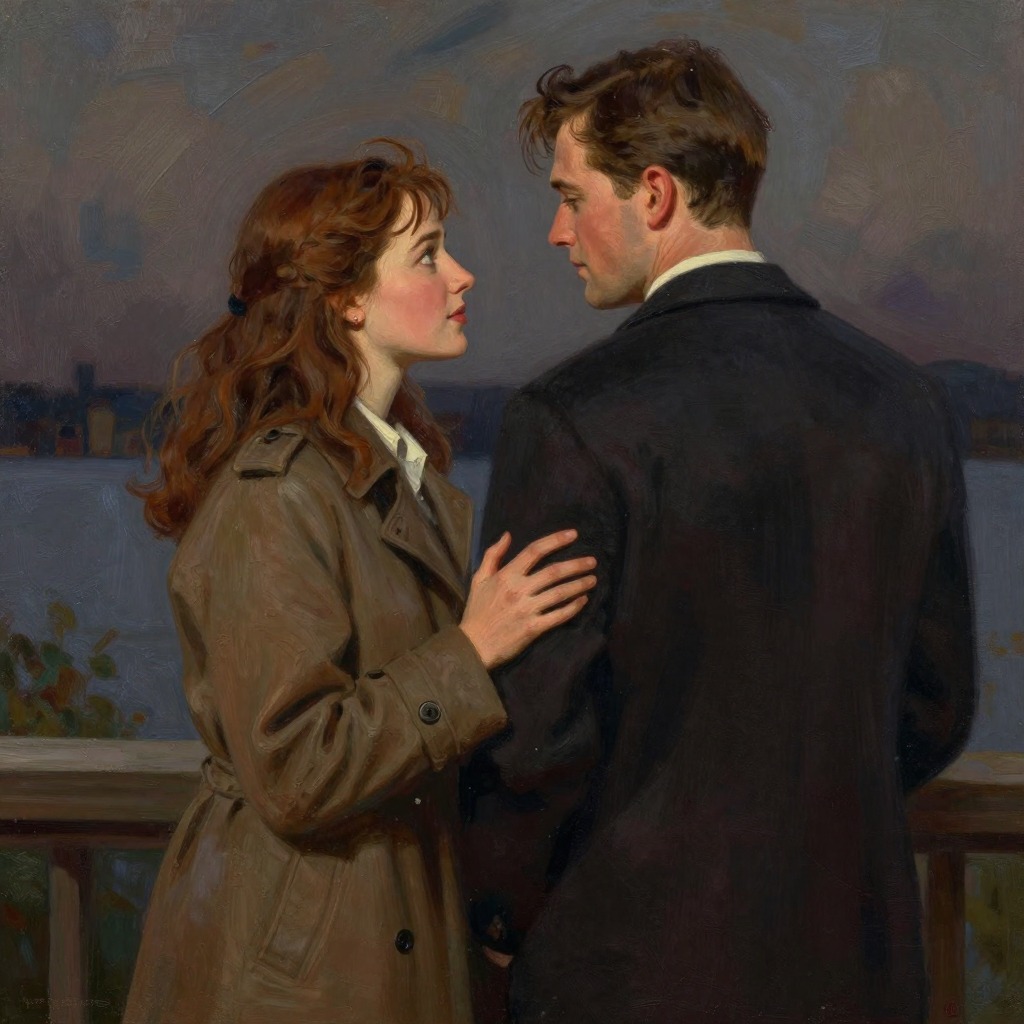
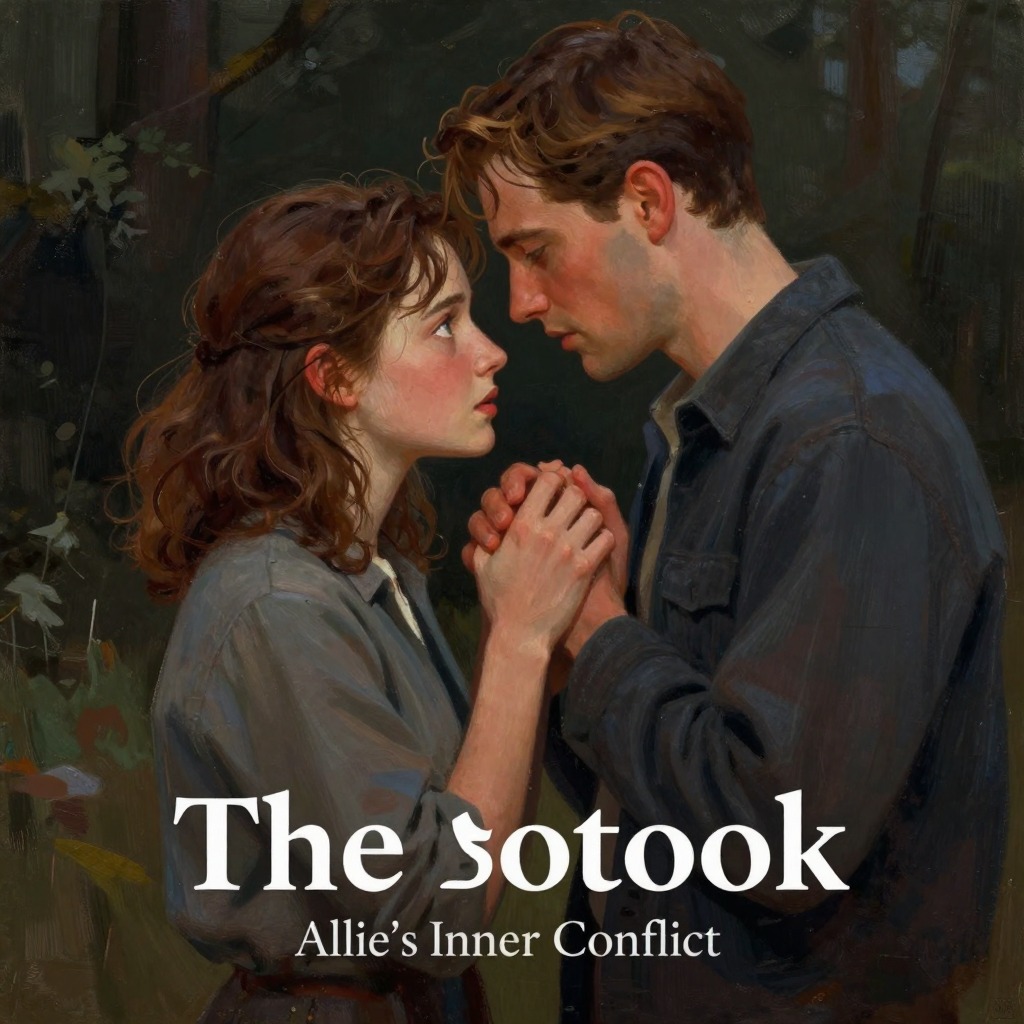
The decision is forced to a head by the arrival of Allie's mother, Anne Nelson, who appears at Noah's door the morning after the storm. Anne reveals that Lon had called her, having deduced that Allie was with Noah, and that he was on his way to New Bern. She also returns the bundle of letters Noah had written, which she had kept hidden and unopened for fourteen years, apologizing for her interference. In a private conversation, Anne asks Allie if she loves Noah, and Allie answers, "Yes, I do, very much," while admitting she also loves Lon, "Dearly, but in a different way. He doesn't make me feel the way Noah does." Anne tells her, "No one will ever do that," and urges her to think about what she really wants, whispering "Follow your heart" as she leaves. Allie then tells Noah she wants to stay, but she is tormented by the fear of hurting Lon and betraying her family and friends. Noah pleads with her, saying, "We're meant to be together. We always have been," but Allie ultimately leaves, driving back to town to face Lon.
The Final Choice
Allie's decision is finally made in the lobby of the inn where Lon is waiting. The narrative, as recalled by Noah in a letter to their children, describes how Allie and Lon sat on a bench by the old Methodist church, where Lon held her hand even as she explained that she must stay. She told him she had always loved Noah, and that it wouldn't be fair to him, but Lon tried for almost an hour to change her mind. When Allie said, "I can't go back with you, I'm so sorry," Lon simply nodded, and they sat together for a long time without speaking. He then walked her to her car and told her that Noah was a lucky man, behaving "as a gentleman would." Allie returned to Noah the next day, and though she was shaking with fear that he would not forgive her for leaving, he greeted her with a smile and said only, "How about some coffee?" He never brought up her departure again in all their years together. They were married in a small chapel, and Allie later wrote that when she looked into his eyes, she knew she had made the right decision, and that she was foolish for ever considering someone else.
A Lifetime of Consequences
The decision to stay sets in motion a marriage of almost forty-nine years, a union that produces five children, four of whom survive, and a life that Allie later describes as "the greatest life possible." The choice also carries a tragic irony, for Allie's Alzheimer's disease eventually erases her memory of the decision itself, leaving her unable to recognize Noah on most days. Yet the decision becomes the foundation of the story Noah reads to her every morning, the story of how she came back to him, and it is this story that occasionally, miraculously, restores her awareness, allowing her to say, "I think I know who Allie went with at the end of the story. She went with Noah." The decision, in the end, is not just a romantic choice but a moral one, a rejection of social expectations in favor of authentic love, and it is the reason Noah can say, "I am who I am because of you."